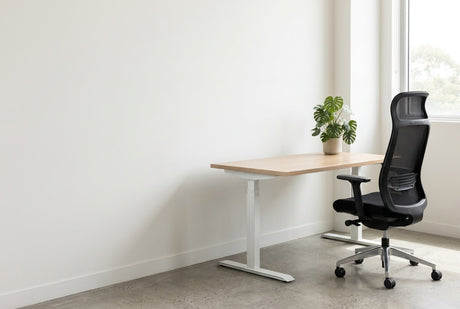
By quarter to nine on a Monday, most clinic waiting rooms look the same. A parent is trying to park a pram without blocking the door. An older patient is lowering herself into a chair with one hand on a walking frame. The receptionist is wiping down the seat the last patient coughed over. Every one of those moments is shaped by medical clinic furniture, and most of it was chosen long before anyone sat down.
This guide works through a GP, dental, physio or allied health clinic room by room: the waiting room, the consulting room and the storage behind the scenes. Most of the seating comes from our visitor and waiting room chairs.
Waiting room seating: arms, height and wipe-clean surfaces
Start with how people stand up. Someone unwell, pregnant, recovering from surgery or older pushes up from the armrests. A chair with an arm on each side gives them two firm points of leverage. Seat height matters too, because a higher seat leaves less distance to push up from. Low lounges and deep sofas fail on both counts.
Next comes cleaning. PU and vinyl have a sealed surface, so spills and cleaning solution stay on top rather than soaking in. The Stacking Visitor Chair (PU) (from $121) is a simple example. It comes in black PU with or without fixed arms, has a 470mm seat height and a 470 x 470mm seat, and carries a 120kg user weight rating and a 5 year warranty. Order the version with arms for most of the room.

It stacks, so you can clear floor space for a flu clinic morning. The trade-off is warmth. PU is less breathable than fabric, so it can feel sticky in a warm room on a long wait. Our guide to fabric, mesh, vinyl and leather chair upholstery compares how each surface cleans and wears.
Wider seats and higher weight ratings
Plan for larger patients from the start. A couple of wider, higher-rated seats placed among the standard chairs means nobody has to perch on a seat that is too narrow. Keep them in the main row rather than tucked into a corner, so they read as ordinary seating.
The Endura Max Bariatric Chair ($408) is designed for exactly this. It is rated to 300kg on a reinforced, fully welded steel frame, and its seat is 790mm wide, 470mm deep and 450mm high. Overall it is 880mm wide and 650mm deep, with a 5 year warranty.

Two practical points. First, it takes 880mm of wall, so measure the row before you order. Second, it is upholstered in black fabric rather than PU, which hides everyday marks well but needs spot cleaning instead of a quick wipe.
The consulting room: desk, clinician's chair and patient chairs
Sitting square across a desk from a patient can feel like an interview. A P end desk lets the patient sit at the rounded end, at an angle to the clinician, with no wide barrier between them. It also makes it easier to turn the screen towards them.
The Logan P End Desk ($408) is 2100mm wide and 730mm high, with a listed depth of 900mm/1050mm. It has 25mm thick tops and sides, shock absorbent PVC edges, adjustable feet and pre-drilled cable entries. It sets up left or right hand, comes in White / Ironstone and has a 5 year local warranty.

At 2100mm long it suits a standard consulting room, but it will crowd a small physio or psychology room. The clinician's chair matters just as much, because it is used all day and swivels between screen, patient and couch. The Buro Mentor - SafeTex (from $621) has a synchronised seat and back with 4 position locking, self weighting tension, a depth adjustable seat slide and adjustable lumbar support.
It is rated for 8+ hours of sitting a day, with a 475 to 595mm seat height, 60mm soft PU castors and a 10 year guarantee. It is certified to 135kg single shift and comes with or without arms. Its Buro SafeTex upholstery is antibacterial, in Charcoal, Olive, Rust, Cobalt or Smoke. For patients, add two chairs, at least one with arms, and leave clear floor beside the desk for a wheelchair or pram.
Lockable storage for files and supplies
Paperwork, consumables, staff bags and spare equipment should not sit on open shelves. A lockable steel cabinet keeps them out of sight.
The Steelco 2 Shelf Storage Cabinets (from $363) stand 1015mm high, 914mm wide and 463mm deep. They have reinforced doors with a 3 point locking mechanism and a barrel exchange lock supplied with anti-bacterial keys. The two shelves adjust in 32mm steps and hold 40kg each, and the doors open to 180 degrees.
They arrive pre-assembled with a powder coated finish and a 10 year warranty, in White Satin, Graphite Ripple or Silver Grey. These are stationery cabinets, though, so they do not replace the dedicated medicine storage your clinic's procedures require. Browse more office cupboards and storage for taller options.
Medical clinic furniture, room by room
| Room | Main job | Furniture | Look for | Example |
|---|---|---|---|---|
| Waiting room | Seat patients and companions, some with limited mobility | Visitor chairs with arms, a few wider seats | Arms on both sides, wipe-clean PU or vinyl, gaps for prams and wheelchairs | Stacking Visitor Chair (PU) (from $121); Endura Max ($408) |
| Reception | Check-in, payments and phone calls | Counter, task chair, lockable drawers | A counter section that suits seated visitors | Reception counters and desks |
| Consulting room | Consultations, notes and screen work | Desk, clinician's chair, two patient chairs | No barrier between clinician and patient; an adjustable chair for all-day use | Logan P End Desk ($408); Buro Mentor SafeTex (from $621) |
| Store room or back office | Files, consumables and staff belongings | Lockable cupboards | Key lock, adjustable shelves, a wipeable finish | Steelco 2 Shelf (from $363) |
The front desk has to suit staff and patients in wheelchairs alike. Compare counters in our reception furniture range before you settle the layout.
Cleaning, access and Australian clinics
Your clinic's infection control procedures set the cleaning routine; the furniture has to cope with it. Guidance from the Australian Commission on Safety and Quality in Health Care notes that most hard surfaces can be cleaned with detergent and warm water, with disinfectant added where a risk assessment calls for it. For GPs, the RACGP publishes infection prevention and control guidelines for general practices and other office-based practices.
Antibacterial upholstery is a useful extra, but it never replaces the cloth and detergent. Avoid tufted or buttoned upholstery, where dust and spills collect.
Climate matters too. In humid Brisbane, Cairns or Darwin summers, fabric in a poorly ventilated room can grow mould, while PU and powder coated steel wipe clean. For access, keep a clear path from the entrance to reception and every consulting room. Leave a gap in each seating row so a wheelchair or pram can sit beside a companion instead of in the walkway.
Medical clinic furniture — frequently asked questions
What is the best chair material for a medical waiting room?
PU or vinyl is the easiest to clean, because spills stay on the surface. Fabric is softer and warmer, so a sensible mix is mostly wipe-clean chairs plus a few fabric seats.
Should waiting room chairs have arms?
Yes, most of them should. Armrests give unwell, older and pregnant patients something to push against when they stand. Keep a few armless chairs for people who find arms get in the way, such as a parent with a toddler on their lap.
What weight rating do clinic chairs need?
Standard visitor chairs suit most of the room, but include a few seats with a much higher rating, such as a 300kg bariatric chair. A typical stacking visitor chair here is rated to 120kg.
What is a P end desk used for in a consulting room?
It seats the patient at the rounded end, at an angle to the clinician rather than across a barrier, which makes conversation and screen sharing easier.
Shop the range
Fit out the waiting room from our visitor and waiting room chairs, then plan the front desk with reception furniture and the back rooms with lockable storage. For a wider, higher-rated seat, start with the Endura Max Bariatric Chair. Metro delivery is a flat $75 per order, and prices include GST.